Currency
|

The RTL-SDR BLOG V3 is a low-cost software defined radio USB dongle. Perfect for getting into projects that utilize software defined radios or just learning more about them.
The RTL-SDR Blog V3 is an improved RTL-SDR dongle. RTL-SDR dongles were originally designed for DVB-T HDTV reception, but they were found by hardware hackers to be useful as a general purpose SDR. The standard dongles are okay for DVB-T reception, but are just barely suitable for SDR users/experimenters. The RTL-SDR Blog V3 was redesigned with SDR user needs in mind, instead of DVB-T HDTV users who typically have more relaxed requirements.
RTL-SDR works hard to maintain a higher standard of quality for the BLOG V3 among the other entry level SDR dongles on the market such as upgraded antennas and an Aluminum case for better cooling. With a bandwidth up to 2.4MHz and a frequency range of 500kHz - 1766 MHz it's a capable SDR at a great price.
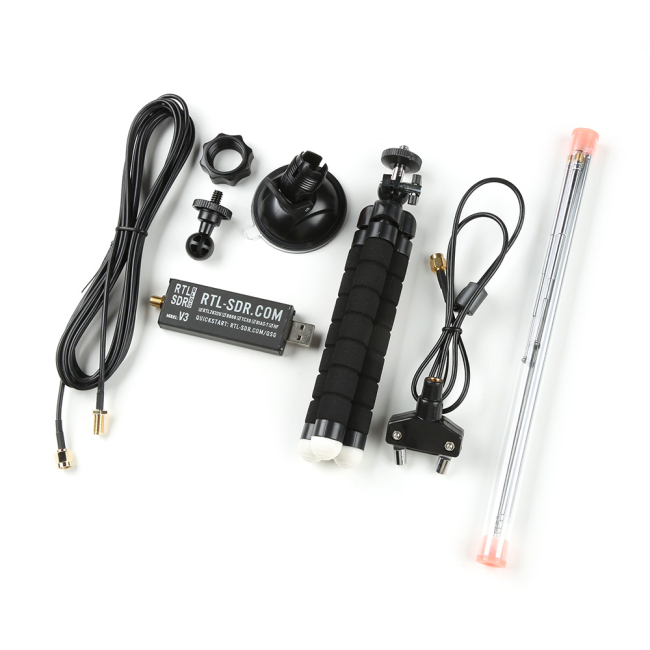
This kit includes the BLOG V3 USB Dongle and the RTL-SDR VHF/UHF dipole antenna kit. Great for beginners as it allows for terrestrial and satellite reception.
Includes:
| Manufacturer | SparkFun |
|---|