Currency
|

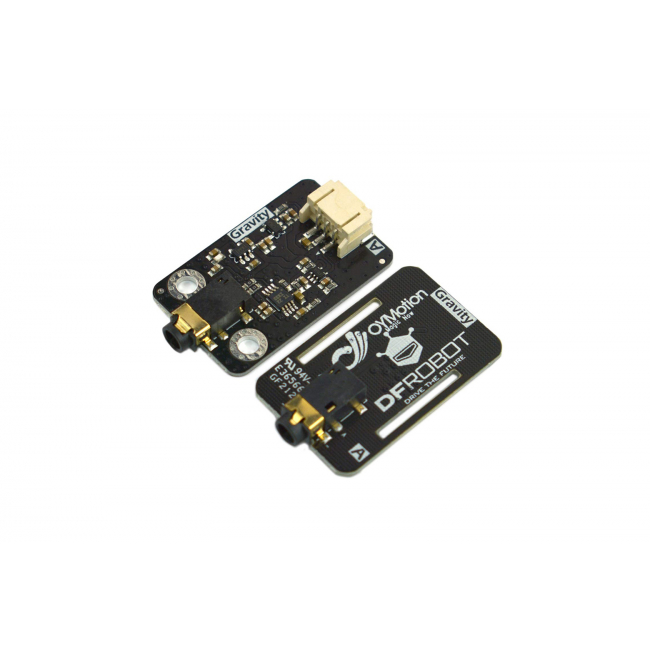
This Gravity analog EMG sensor by DFRobot and OYMotion turns surface muscle activity into an input for interactive projects. Reusable metal dry electrodes collect surface electromyography signals without conductive gel, while integrated amplification and filtering prepare the small signals for reading by Arduino or another suitable analog-input controller. The 0~3.0V output supports muscle-activity waveform experiments and software-based interaction, from contraction-triggered robot commands to wearable effects. The kit includes the electrode board, wrist belt, electrode cable and signal transmitter, providing the core sensing hardware for a muscle-controlled prototype. This EMG sensor is intended for non-medical projects.
Reusable Dry Electrodes Without Conductive Gel
This EMG sensor uses metal dry electrodes to collect surface muscle signals without applying conductive gel. Compared with disposable gel-based electrodes, the reusable electrode board offers a convenient arrangement for repeated maker experiments and wearable prototypes. The included wrist belt helps position the board during use, and the electrode cable links the sensing board to the transmitter. Align the electrode with the muscle direction and maintain good contact with exposed skin for effective signal collection.
1000x Amplification with Integrated Noise Filtering
This analog EMG sensor amplifies small sEMG signals within ±1.5mV by 1000 times. Differential input and analog filtering reduce noise, including power-frequency interference, to make muscle-activity signals more accessible to a controller. The output spans 0~3.0V around a 1.5V reference, carrying waveform information rather than a simple on/off result. This signal-conditioning stage provides a practical starting point for exploring muscle contraction patterns and developing application-specific processing for interactive control.
Gravity Analog Interface for Muscle-Controlled Prototypes
This EMG kit combines a PH2.0-3P analog interface with a 3.3~5.5V supply range for integration into controller-based projects. The supplied Gravity analog cable connects the signal transmitter to a suitable analog input, while the separate electrode board allows flexible placement on the muscle being observed. Arduino examples support waveform viewing and fist-count experiments. Software can then translate changes in muscle activity into project actions, such as triggering a servo-driven wearable effect or a robot command.
1. The supply voltage range is 3.3~5.5V; The supply current should not be less than 20mA; The ripple current and disturbance current should be as low as possible. Stabilized DC voltage is recommended.
2. The effective spectrum range is 20Hz~500Hz, and the ADC converter which has higher than 8-bit resolution and 1 kHz frequency are recommended to take samples and digitized to keep original information.
3. Placing the metal dry electrode should consistent with the direction of muscle.
4. The product is not a professional medical device and cannot diagnose and cure disease as an assistant device.
| Manufacturer | DFRobot |
|---|