Currency
|

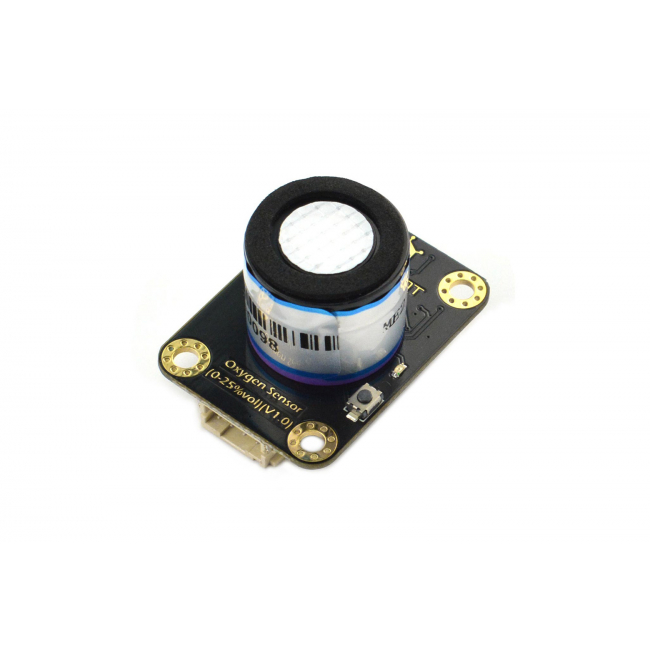
This Gravity electrochemical oxygen sensor adds ambient O2 concentration measurement to air-monitoring projects without requiring an external analog signal converter. The 0~25%Vol measurement range and 0.15%Vol resolution support oxygen concentration readings in portable instruments, environmental monitoring systems and warehouse observation projects. I2C output, a Gravity interface and practical sample code simplify integration with Arduino Uno, ESP32 and Raspberry Pi. A 3.3 to 5.5V DC supply range accommodates common controller platforms, while air calibration helps maintain measurement performance. This compact module measures oxygen in air, making the sensor suitable for gas-concentration projects.
Electrochemical Sensing for Ambient Oxygen Measurement
This O2 sensor uses electrochemical sensing to measure oxygen concentration in ambient air, with high sensitivity, stability and resistance to interference. The specified response time is ≤15 seconds, supporting projects that track changing oxygen levels. A 0.15%Vol resolution describes the measurement granularity, while the specified measurement range remains 0~25%Vol. These parameters help match the sensor to an air-monitoring project without confusing the separately listed maximum measurement limit with the normal operating measurement range.
Digital I2C Connection Across Common Controllers
This Gravity oxygen sensor provides concentration data through a standard I2C interface, keeping communication straightforward for compatible controllers. The 3.3 to 5.5V DC operating range supports both 3.3V and 5V microcontroller systems, and built-in polarity protection adds hardware protection during integration. The included Gravity-4pin I2C cable and sample code provide a practical starting point for connecting and reading the module. A 37 * 27 * 24.5 mm footprint supports installation in compact monitoring builds.

Air Calibration and a Specified Service Life Over Two Years
This electrochemical oxygen sensor supports calibration in air, providing a convenient reference for setting up ambient oxygen measurements. Periodic calibration is recommended according to the usage environment, rather than relying on a fixed universal interval. The specified service life is over two years in air under normal conditions. Combined with the Gravity interface and practical examples, these capabilities support repeat use in monitoring projects while keeping calibration and operating conditions part of the measurement workflow.
Selection Guide
| Manufacturer | DFRobot |
|---|