Currency
|

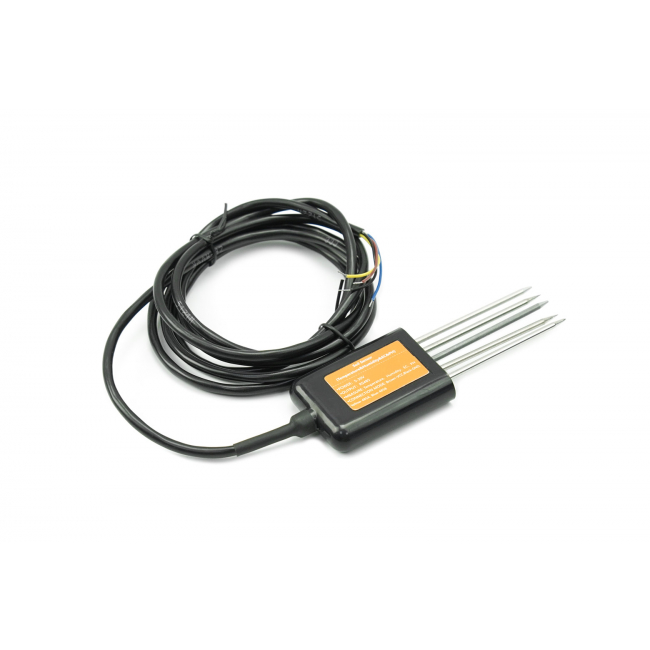
This 4-in-1 RS485 soil sensor brings temperature, moisture, electrical conductivity (EC), and pH readings together in one probe for greenhouse, irrigation, and horticultural monitoring projects. Instead of installing separate probes for these four parameters, this soil sensor provides a shared measurement point and one RS485 connection using Modbus-RTU. A 5–30V supply range supports integration into different monitoring systems, while IP68 protection and a sealed stainless steel probe support long-term soil burial. With an Arduino UNO and a suitable TTL-to-RS485 interface, this sensor provides a starting point for collecting soil data and developing project-specific irrigation decisions.
Four Soil Parameters from One Probe
This soil sensor combines moisture and temperature measurements with EC and pH, providing more context than a moisture-only reading. Moisture indicates changing water conditions, temperature tracks the soil environment, EC provides a reference for salinity trends, and pH indicates acidity or alkalinity. Reading these parameters together helps greenhouse and cultivation projects compare conditions over time without managing four separate sensor installations. EC does not identify individual nutrients or replace nutrient-specific testing.
RS485 Modbus-RTU with 5–30V Power
This RS485 soil sensor uses Modbus-RTU to deliver digital readings to a compatible monitoring controller. The 5–30V supply range gives flexibility when choosing a project power source, and the included 2m cable supports placement at the measurement site. Arduino documentation demonstrates reading the four parameters through an RS485 interface, providing a practical route to custom data logging, greenhouse dashboards, and irrigation monitoring systems without interpreting separate analog sensor outputs.
IP68 Sealing for Long-Term Soil Burial
This soil sensor combines a 316 stainless steel probe with vacuum-filled black flame-retardant epoxy sealing and IP68 protection. The corrosion-resistant construction supports extended soil installation, allowing measurements at a chosen depth without repeatedly inserting separate handheld probes. This design suits greenhouse beds, vegetable plots, and agricultural monitoring points. Soil salt content can influence sensor performance, so readings should be evaluated under the actual installation conditions rather than assumed identical across all soil types.
EC Temperature Compensation for Changing Soil Conditions
This soil sensor supports conductivity temperature compensation over 0–50°C, helping account for temperature-related EC changes within the specified compensation range. For greenhouse and field monitoring, this feature adds useful context when comparing conductivity readings taken at different temperatures. The integrated temperature measurement and EC sensing bring both parameters into the same monitoring setup, with compensation settings configurable through the documented Modbus registers.
Wiring Diagram of soil sensor and Arduino Uno
Probe Material - 316 Stainless Steel
pH value: soil acidity and alkalinity
<4.5 Extremely acidic
4.5-5.5 Strongly acidic
5.5-6.5 acidic
6.5-7.5 Neutral
7.5-8.5 alkaline
8.5-9.5 Strongly alkaline
>9.5 Extremely alkaline
How to install and use the soil sensor
For more detailed insights on selecting the most suitable sensor, refer to the guide on [How to Select the Best Soil Moisture Sensors for Agriculture and Research Lab].
| Manufacturer | DFRobot |
|---|